Game Mechanic Patterns and Studio Decisions Drive Engagement Shifts in Regulated Markets
Noah Sullivan · Oct 31, 2026
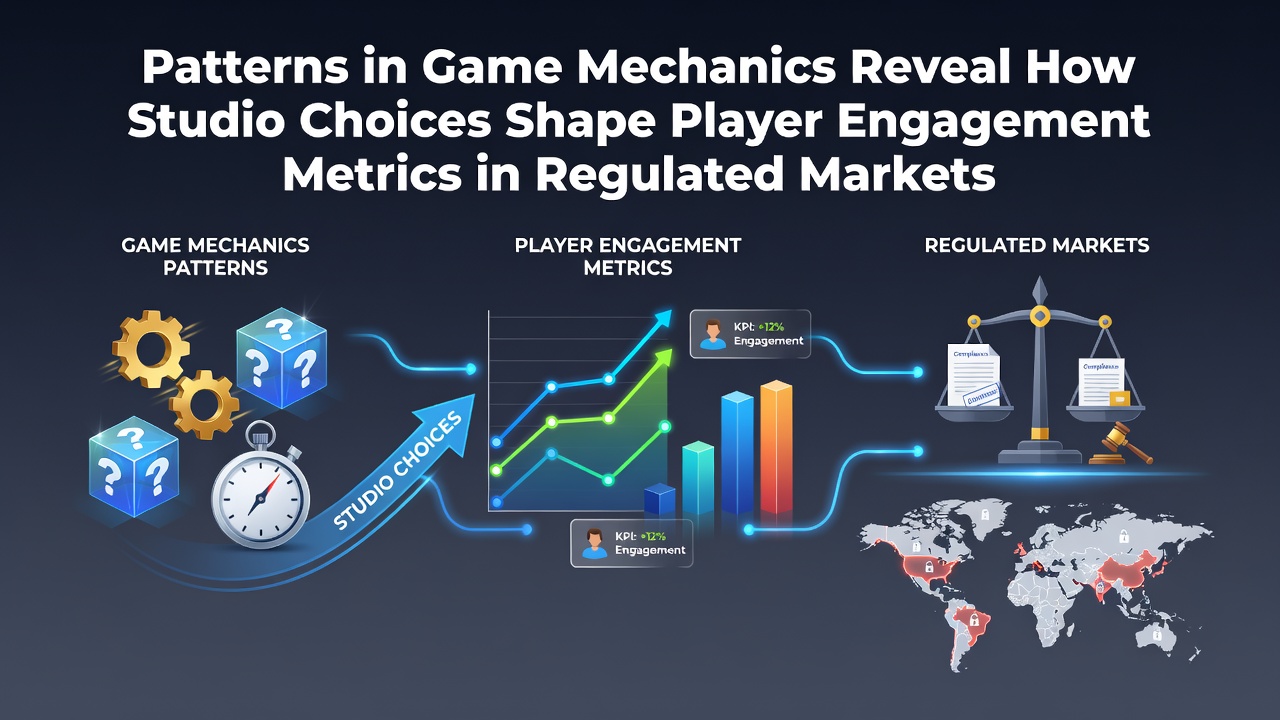
Game Mechanic Patterns and Studio Decisions Drive Engagement Shifts in Regulated Markets
Researchers tracking digital entertainment have documented consistent patterns where specific game mechanics correlate with measurable changes in player retention and session duration across regulated environments, and data from multiple jurisdictions highlights how studio selections around reward structures and progression systems produce distinct engagement outcomes. Studies compiled through 2026 show these relationships hold steady even as oversight frameworks evolve, with October figures from various monitoring bodies indicating stable trends in markets that enforce strict compliance standards.
Core Mechanics That Shape Retention Curves
Progression loops and layered reward schedules appear repeatedly in analyses of high-engagement titles, while studios that integrate adaptive difficulty scaling alongside timed events tend to record longer average play intervals according to aggregated platform reports. Those who have examined telemetry from licensed operators note that mechanics allowing incremental player agency, such as customizable loadouts or branching decision trees, frequently align with higher completion rates of daily or weekly challenges. Evidence from industry datasets reveals that games emphasizing social competition features sustain repeat logins at rates that exceed titles relying primarily on solitary progression paths.
Regulatory Frameworks Influence Design Parameters
Market rules in regions outside the UK set boundaries on payout frequencies, feature visibility, and promotional mechanics, which in turn guide the choices studios make when building core loops. Observers note that compliance requirements in North American and European jurisdictions often steer developers toward transparent probability displays and capped bonus triggers, and these constraints have produced measurable shifts in how engagement metrics respond to new releases. A report from the Nevada Gaming Control Board details how adjusted feature limits in 2025 altered session patterns without reducing overall participation numbers, while Australian regulatory summaries from the same period record similar stabilization in player activity following rule updates on in-game economies.
Studio Choices and Resulting Metric Variations
Developers balance innovation against regulatory ceilings when selecting mechanics, and those decisions manifest in engagement statistics tracked by independent auditors. For instance, titles that incorporate dynamic event calendars tied to real-world time show elevated daily active user counts compared with static content rotations, according to cross-market comparisons released by research institutions. Data indicates that mechanics emphasizing collection systems or milestone rewards generate stronger long-term retention when paired with clear regulatory disclosures, whereas overly complex hidden triggers correlate with quicker drop-off points in monitored player cohorts.

What's interesting is how small adjustments in mechanic density produce outsized effects on time-on-device figures once regulatory filters are applied, and analysts from academic groups tracking these variables across 2026 releases have mapped several repeatable patterns. Studios that favor transparent risk-reward presentations rather than opaque probability layers tend to maintain steadier engagement curves, particularly in markets where consumer protection mandates require upfront information. One study released by a Canadian research consortium found that simplified reward visualization increased repeat session frequency by measurable margins in controlled test environments.
Cross-Market Comparisons Reveal Consistent Trends
Comparative reviews of engagement data from the United States, Australia, and select European territories demonstrate that mechanic transparency requirements correlate with steadier retention metrics, whereas markets with fewer disclosure rules exhibit more volatile session lengths. Figures compiled through October 2026 illustrate that studios adapting core loops to meet diverse regional standards achieve broader player bases without sacrificing per-user activity levels. Industry associations tracking these adaptations report that modular mechanic frameworks allow faster compliance adjustments while preserving the engagement signals originally observed in less restricted development cycles.
Conclusion
Patterns emerging from game mechanic implementations continue to demonstrate clear connections to engagement metrics in regulated markets, with studio selections around reward timing, transparency, and progression complexity serving as primary variables. Data gathered across multiple oversight regions through late 2026 confirms these relationships remain stable even amid evolving compliance landscapes, and ongoing monitoring by regulatory bodies and research teams provides further insight into how design parameters translate into measurable player behavior.