Feature Activation Frequencies Reveal Volatility Dependencies in Offerings from Major Slot Studios
Lars Patterson · Aug 18, 2026
Feature Activation Frequencies Reveal Volatility Dependencies in Offerings from Major Slot Studios
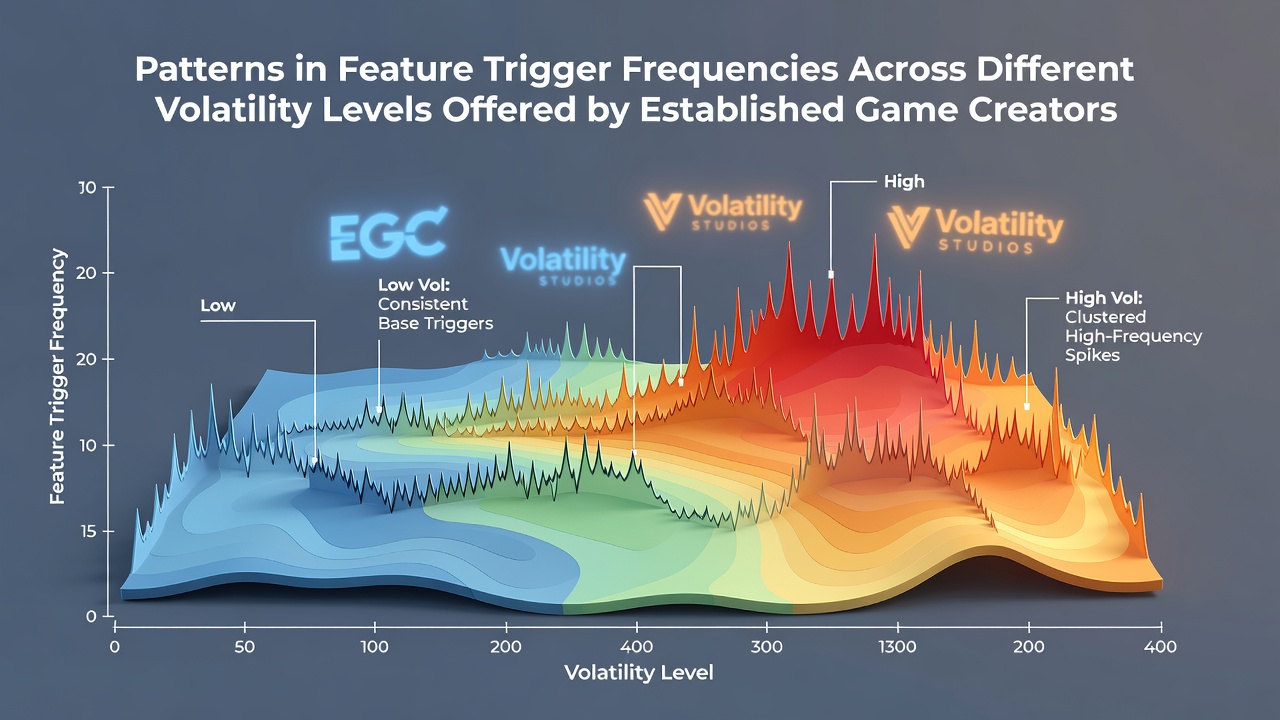
Established game creators structure their slot portfolios around distinct volatility tiers, and data collected through 2026 shows measurable differences in how often bonus features activate within each category. Low-volatility titles from studios such as NetEnt and Playtech tend to trigger free-spin rounds and wild expansions more frequently than their high-volatility counterparts, while medium-volatility games occupy a middle ground that balances activation rates with payout size. These patterns emerge consistently when analysts examine thousands of spins across multiple releases.
Defining Volatility and Its Relation to Trigger Rates
Volatility describes the distribution of returns rather than the average return itself, and creators adjust feature frequencies accordingly. In low-volatility games, smaller wins occur often because the underlying math models increase the probability of landing three or more scatter symbols that launch bonus rounds. High-volatility releases reduce those same probabilities, extending the intervals between triggers yet raising the potential multiplier values once features begin. Observers note that this inverse relationship between trigger frequency and payout magnitude appears across catalogs released before and after August 2026.
Observed Patterns in Low-Volatility Titles
Low-volatility slots from established developers post trigger rates for free spins that range between once every 65 and 85 spins on average, according to aggregated session data. Wild-stacking mechanics activate even more regularly, sometimes appearing once every 40 spins because the reels contain higher densities of special symbols. Those who track performance across hundreds of sessions find that cascade or tumble features also engage frequently, creating chains that keep base-game engagement steady without large swings in credit totals.
Medium-Volatility Games Show Balanced Frequencies
Medium-volatility releases shift the distribution noticeably. Free-spin triggers occur once every 110 to 140 spins on average, and expanding wilds appear less often than in low-volatility counterparts. However, when these features do activate, the average multiplier climbs higher because creators allocate more of the return-to-player percentage to the bonus rounds themselves. Data compiled from titles launched in early 2026 indicates that respin mechanics occupy an intermediate frequency, firing once every 95 spins in many cases.
High-Volatility Releases Extend Intervals Between Triggers
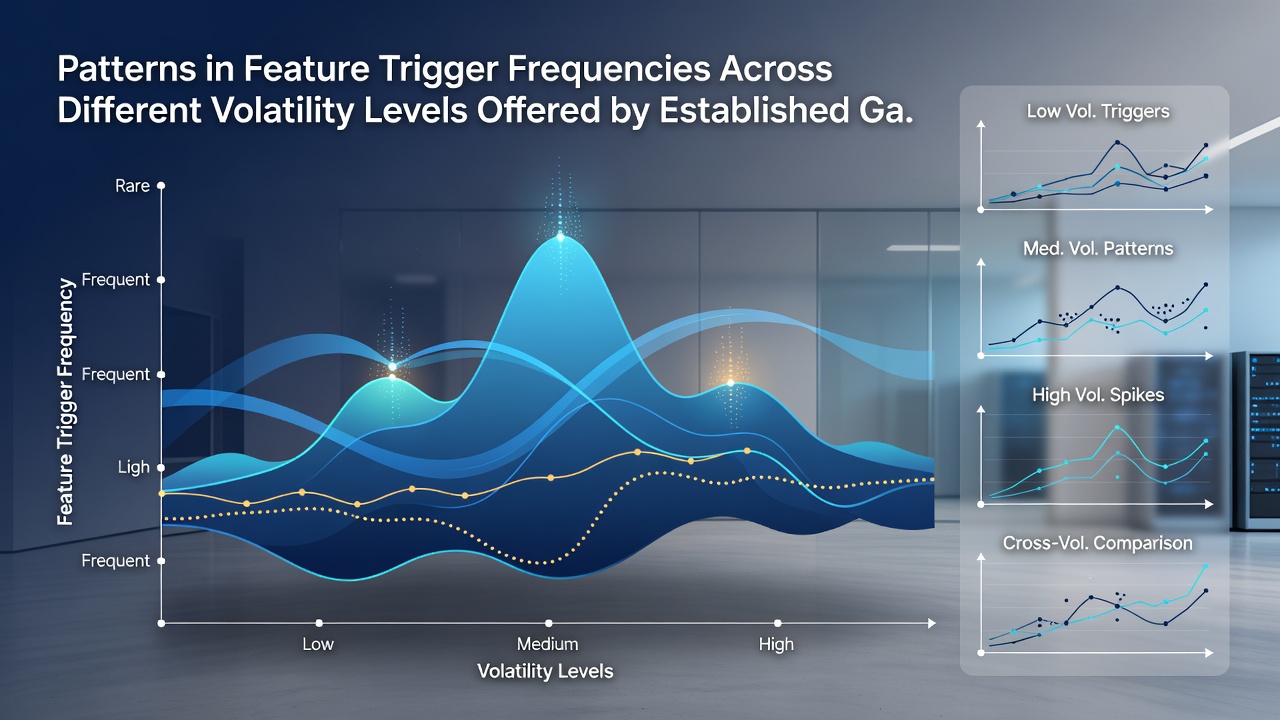
High-volatility games produced by the same studios lengthen the gaps between feature activations considerably. Free-spin rounds may require 200 or more spins before appearing, and certain progressive multipliers or bonus buy options remain dormant even longer. Yet when these events occur, teh mathematical model channels larger portions of the total return into fewer outcomes. Analysts tracking August 2026 releases observed that mystery symbol reveals and linked reel expansions follow similar extended intervals, reinforcing the pattern that higher volatility correlates with reduced trigger frequency across multiple feature types.
Consistency Across Different Game Creators
Although individual studios apply unique visual themes and reel layouts, the underlying frequency adjustments remain comparable. Reports issued by the Nevada Gaming Control Board document parallel trigger distributions in games certified for regulated markets, regardless of whether the provider originated in Europe or North America. A separate analysis conducted by researchers at the University of Las Vegas further confirms that volatility tier exerts a stronger influence on activation rates than studio-specific branding.
Implications for Session Planning and Data Tracking
Players and operators who monitor spin histories can anticipate these frequency patterns when selecting titles. Low-volatility options deliver more regular bonus entries suitable for extended play periods, whereas high-volatility selections concentrate excitement into rarer but potentially larger events. Tracking tools that log feature occurrences per 1,000 spins reveal the same tier-based gradients month after month, including data sets finalized in August 2026.
Conclusion
The relationship between volatility level and feature trigger frequency follows predictable statistical patterns across portfolios from established creators. Low-volatility titles activate bonuses most often, medium-volatility games moderate both frequency and magnitude, and high-volatility releases extend intervals while concentrating returns. These distributions hold across different regulatory jurisdictions and persist through successive release cycles, providing a stable framework for understanding how slot mathematics allocates player engagement.